Empowering adolescent girls: Ending the cycle of violence”
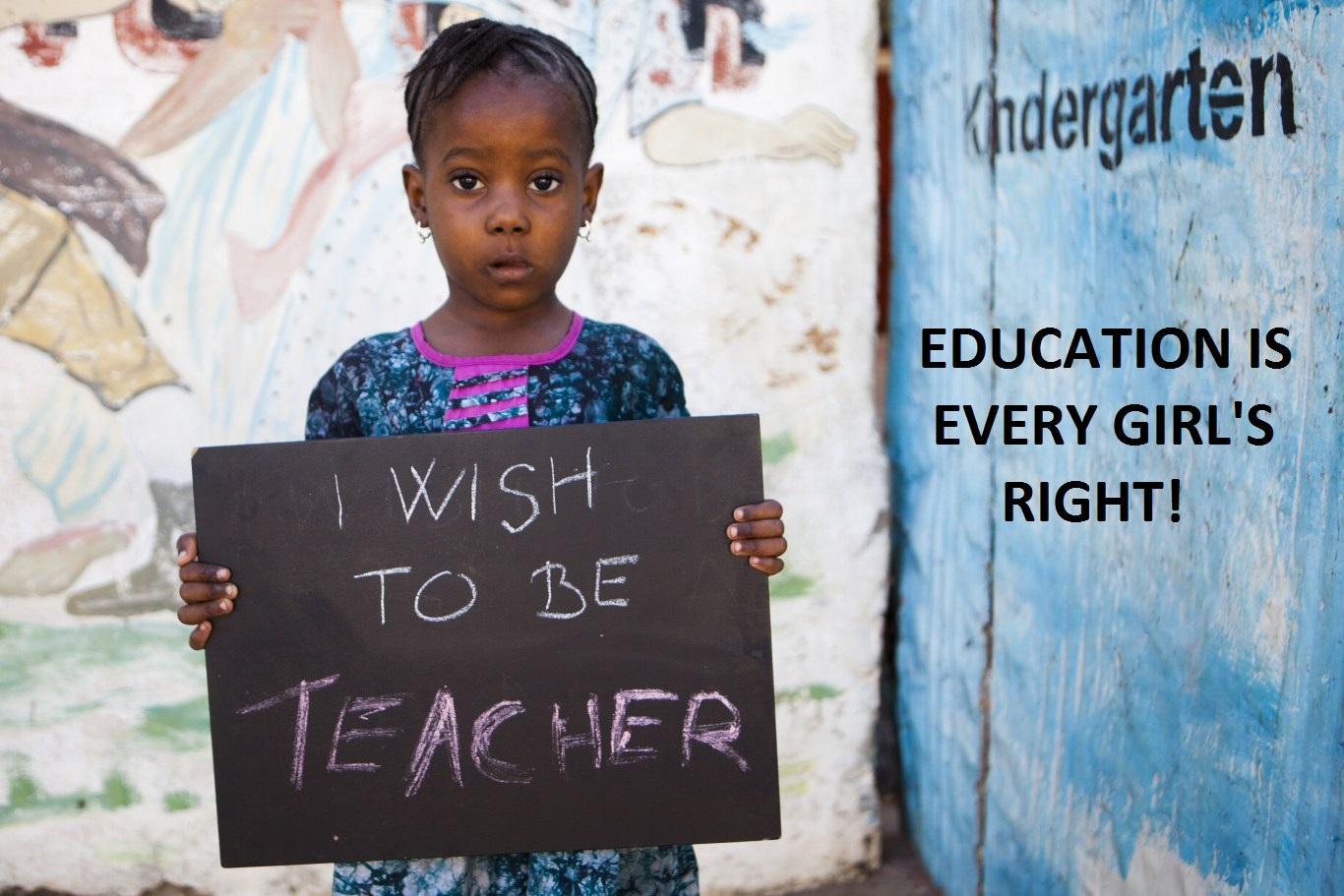
Have you ever thought, what is it like, when a girl can’t eat breakfast in the morning, go to school or kindergarten, learn and have a safe and stable childhood? This is the reality of many girls in developing countries. There is no time for school, play, relaxation, whispering secrets with friends, playing with Barbies, reading or exploring her surroundings. A lot of girls worldwide still have to face discrimination these days, simply because they are girls. But it’s of vital importance that we take action against these problems for the following reasons:
– for each extra year a girl spends in school, her income raises for 15 to 20%
– if 10% more girls go to school, the GDP of the country raises for 3% on average
– an educated woman will marry later and she will have less children, who will also be more healthy
– women invest more of their income into their family than men
– each extra year of a mother’s schooling lessens infant mortality for 5 to 10%
As you can see, the facts speak for themselves. If you empower a girl with education, she will change the lives of everyone around her. Without that, there is a greater chance that she will marry young, have children early and spend the rest of her life in poverty. Countries in development see 1 out of 3 girls getting married before they turn 18. That is 14 million girls per year, almost 39 thousand every day and 1 every 3 minutes.
Every girl has a right to education, but the sad fact is that 65 million girls never get to go to school and even more are struggling to stay where they belong – in the classroom. Girls are taken out of school every day, forced to marry young or become victims of violence at school. There are many obstacles that prevent them from getting an education: early and forced marriage, poverty, poor health and nutrition, violence at school, long distance to school, school fees and other school related expenses, family care and household duties and lack of toilets just for girls.
GIRLS IN THE GAMBIA
Gambia has been successful in achieving an equal primary school enrolment ratio between boys and girls: 103 girls for 100 boys, but this number gets lower with every extra school year. The finishing rate for primary school is 74 girls for 100 boys. Girls finish their education with 6 years of lower primary school on average. 87 girls for 100 boys go to secondary school. They face similar difficulties as their peers in other developing countries: poverty, school fees and other school expenses, taking care of family and the household, early marriage, early pregnancy, … The literacy rate among adult women in the Gambia is currently around 25%. 46.5 % of girls get married before they turn 18. They have no chances of going back to school and continuing their education after that.
Sources:
http://becauseiamagirl.ca/the-girl-issue
http://www.unicef.org/gambia/children_1270.html
http://www.tradingeconomics.com/gambia/literacy-rate-adult-female-percent-of-females-ages-15-and-above-wb-data.html